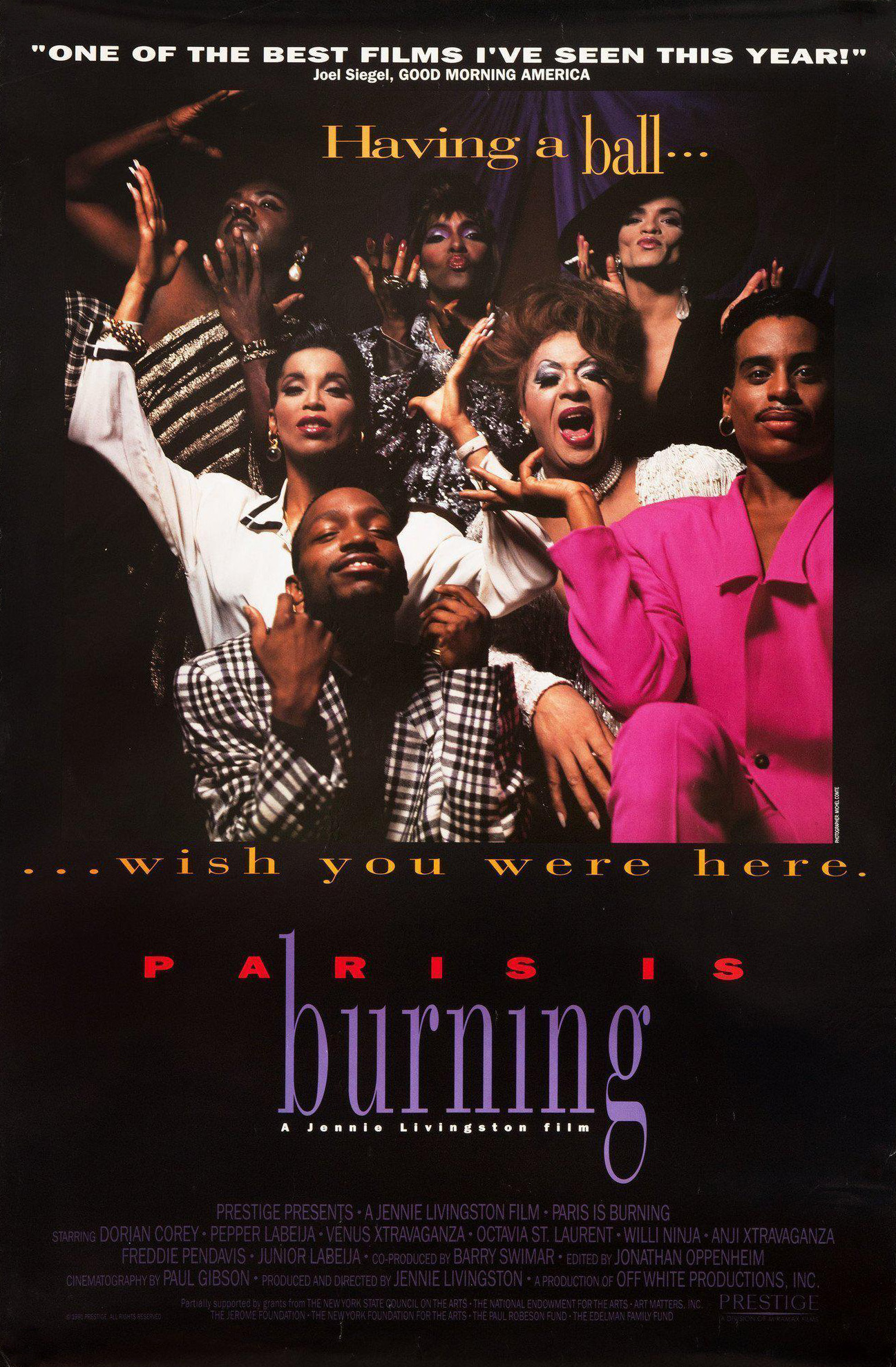
The 1991 documentary, Paris Is Burning, is directed by white lesbian director Jennie Livingston. The documentary focuses on drag queens living in New York City, their house culture, and balls that all provide a sense of community. Community is especially dire for flamboyant and often socially shunned performers. While this film has received a handful of accolades and praise, I for one, was not a fan of this documentary.
To give some benefit of the doubt there are a few aspects of the film that can be applauded. Daniel T. Contreras said in his piece, New Queer Cinema: Spectacle, Race, Utopia, one of the joys of the film is “the courageous, inventive creativity of queers of colour in the most abject of circumstances”. This is true. There is a prominent representation of the Black and Latinx community in New York City. It’s pleasant to see empowered queer people of color celebrating their identity and gain confidence through the Ball whilst dancing, model walking, and dressing up. Yet, that’s probably the only thing I liked about the film.
I agree with Bell Hooks piece Is Paris Burning? and Daniel Contreras’ piece that this movie is essentially… the epitome of glamorizing the white ruling-class. It’s also an exploitation when Livingston is making the lives of people of color into a commodity for white consumption
As I was watching the film I felt saddened by their conditions and only received a surface level education. To me, Livingston films these people, or as what Hooks ironically says “poor souls” with sorrow and pity. She knows this is an interesting story people would watch. As the director, she fails to go past the spectacle of racism, poverty, and why they think a certain way.
If a viewer who is apathetic towards the oppressed watched screens of wealthier white people shopping and happily walking with friends, simultaneously listening to this quote said by Octavia below, they’d assume this woman is shallow, materialistic and envious. When in reality, these women have more depth to them.
“I’d always see the way rich people live, and I’d feel it more, you know, it would slap me in the face, I’d say, ‘I have to have that’, because I never felt comfortable being poor, I just don’t, or even middle-class doesn’t suit me. Seeing the riches, seeing the way people in Dynasty lived, these huge houses and I would think, these people have forty-two rooms in their house, Oh my God, what kind of house is that, and we’ve got three. So why is it that they can have that and I didn’t? I always felt cheated. I always felt cheated out of things like that.”

Instead Livingston should’ve focused on why these people felt the need to associate power with transforming themselves into a white female. If she answered this question, the film would better serve as a noble purpose. She should have “approached her subject with greater awareness of way white supremacy shapes cultural production” (Hooks, 1992) It’s a disturbing thought how some critics found this film to be funny and amazing when it clearly showcased how people of color self-sacrifice themselves to fulfill their fantasies of being upper-class white people. “What Paris is Burning makes poetically clear is that wish fulfilment cannot follow any straightforward political trajectory.” (Contreras, 2004)
In conclusion it’s important to give better representation in new queer cinema. Because this Paris Is Burning “is what makes longing and dream-making such potent and dangerous cultural tools.” (Contreras, 2004)
 Sara's Blog About Film, Gender, Sexuality