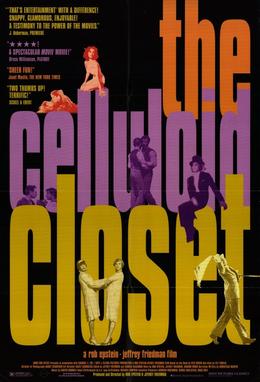
As someone who has not studied film history before, I found the “The Celluloid Closet” an abundance of knowledge. I’d assume before watching Hollywood didn’t acknowledge homosexuality until “Brokeback Mountain” but was I definitely wrong! The documentary explored how within the last century, homosexuality was rarely acknowledged, mostly as something to mock or inspire fear and pity on heteronormativity only (i.e. making the villains gay.) Until the end of the 20th century, homosexuality skewered society’s ideas on how gay people interact and their ideas. Yet, it’s important to acknowledge Hollywood’s double standard between gays and lesbians. “The Celluloid Closet” explained how gay romance and intimacy was seen as a weak, yet Lesbianism was generally more accepted and seen as acceptingly erotic.
The most interesting part of the documentary for me was the “token gesture” of the Hayes Code fascinating. Aside from the documentary, I learned the Hay’s off-limits banned material included smuggling, suggestive dancing, ridicule of religion, miscegenation (mixed-race relationships), white slavery, scenes of passion, and saying the word “pregnant” on screen.
“We will have cleaner and better motions pictures so that they will all stay open.” A huge blow for the LGBTQ+ community considering all gay male characters be eradicated from cinema in 1934. The Hays Code’s sole purpose was to restrict diverse representations of sexuality. But it was “seldom taking seriously.” Thus, more creative directors found ways to get away with it. Screen gays then entered a new phase, becoming evil, predatory villains, portrayed as evil and perverted. Unfortunately, it was something for Gay audiences to be representing in, regardless if they were seen targets as fear and laughable. Then as decades past, more innuendos were seen within gay actors. For example, in what appeared to be a wild west cowboy movie, the gun appeared as phallic symbolism. It was touched, polished, praised, and kept near the man’s penis (signifying the man’s power.)
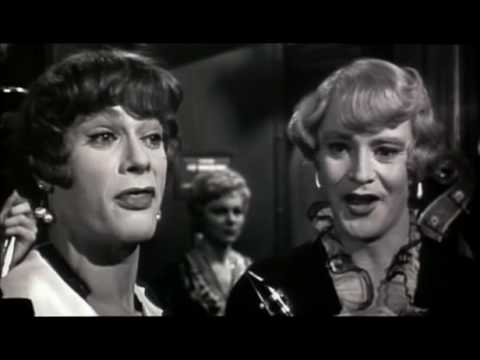
Personally, “The Celluloid Closet” is a great documentary for viewers like me who identify as an ally, yet I do not expect it to change anyone’s views on the acceptability of LGBTQA+ rights. I believe this documentary was incredibly progressive for its time, yet I noticed it’s still about twenty-five years old. Some references were outdated, especially when they used the term transvestite” which is now an inappropriate and derogatory word. From my understanding it’s connotation is homophobic and seen as a diagnosed medical disorder, a new term I believe is “cross-dressing”. (As someone who is heterosexual I want to be cautious and do not want to claim definitions of words belonging to the LGBTQ+ community.) Secondly, I’m happy there were produced movies seeing gays as finally admirable. Yet, Tom Hanks acting as a Gay lawyer in “Philadelphia” was certainly applauded in the 90s, I do think today we would only want gay actors to play gay characters. While there is definitely more representation needed in cinema, I am happy to see Hollywood only becoming more open towards LGBTQ+ representation in their movies.
 Sara's Blog About Film, Gender, Sexuality
One reply on “Now I know More.”
I share your fascination/repulsion with the results of the Hays Code. On the one hand, it forced queerness underground, yet, on the other, it produced all kinds of subliminal codings for queerness. This plethora of suggestiveness has, in a way, enabled the flowering of queer theory, where queerness isn’t compartmentalized, but rather is seen everywhere. So while I don’t applaud the fact that the Hays Code drove queer representation underground, the unintended results of this repression was unexpectedly empowering. As Foucault says, “where there is power, there is resistance.”
LikeLike